Contractors ask us this most weeks, usually the day before the equipment is needed. The honest answer is that the two are not really alternatives. They do different jobs, and the cheaper one is often the wrong one.
The practical difference is weight, and when it arrives
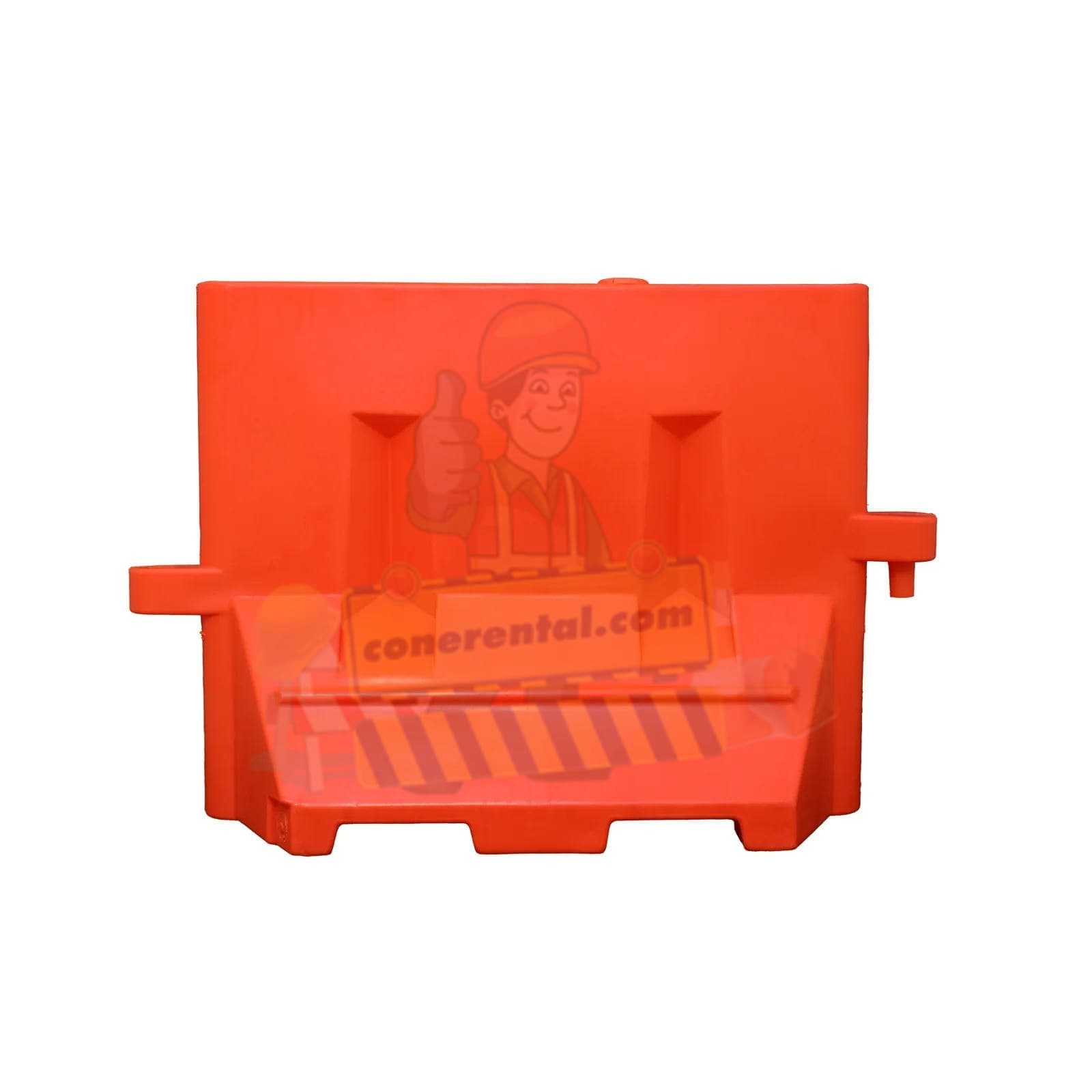
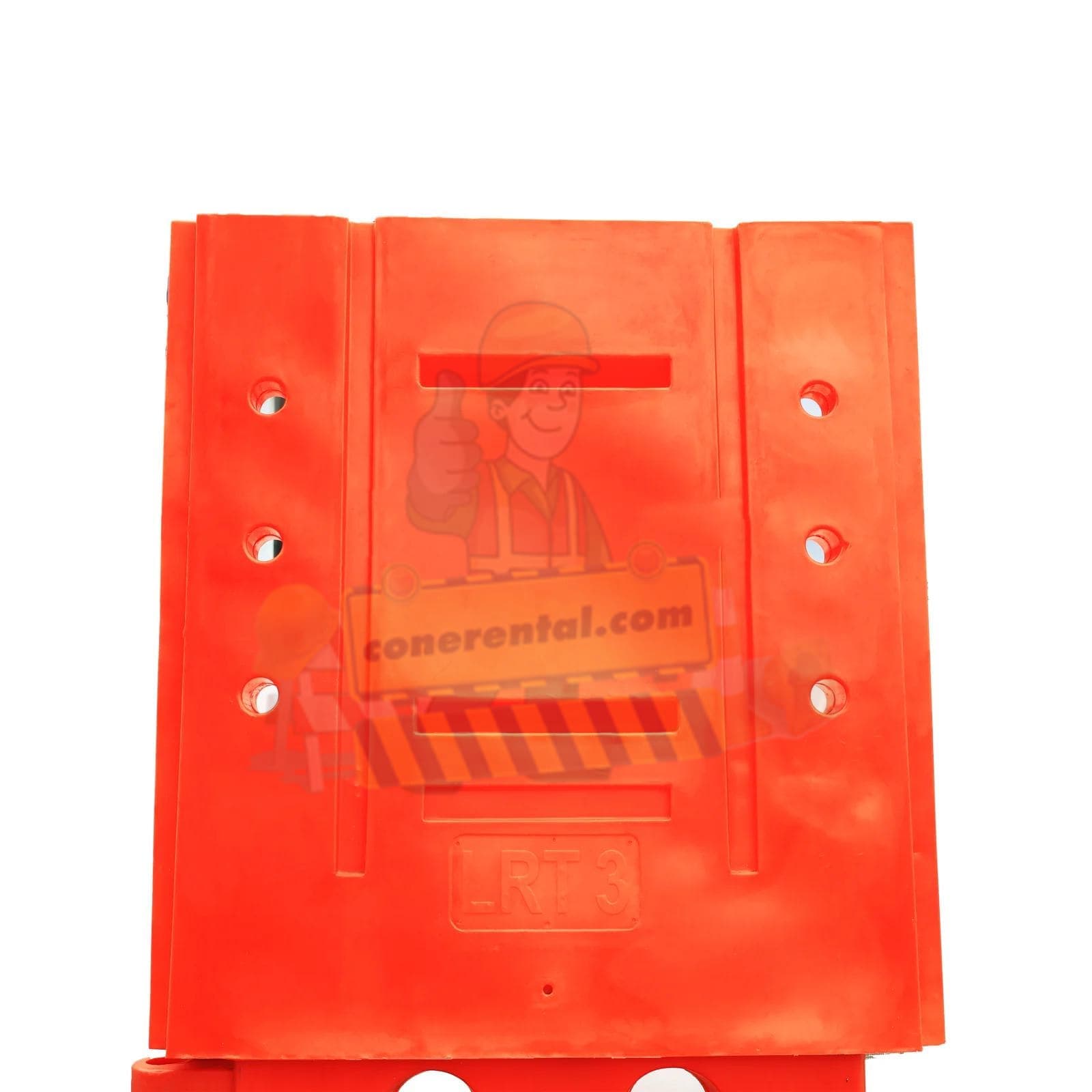
A 1 metre plastic road barrier is 800mm high, 1,000mm long, and weighs 7kg empty. That is the whole point of it. One person carries it, a pickup brings twenty, and you set a line out by hand in minutes. It becomes heavy only once you fill it with water on site, which is also why people look for it as a water barrier.
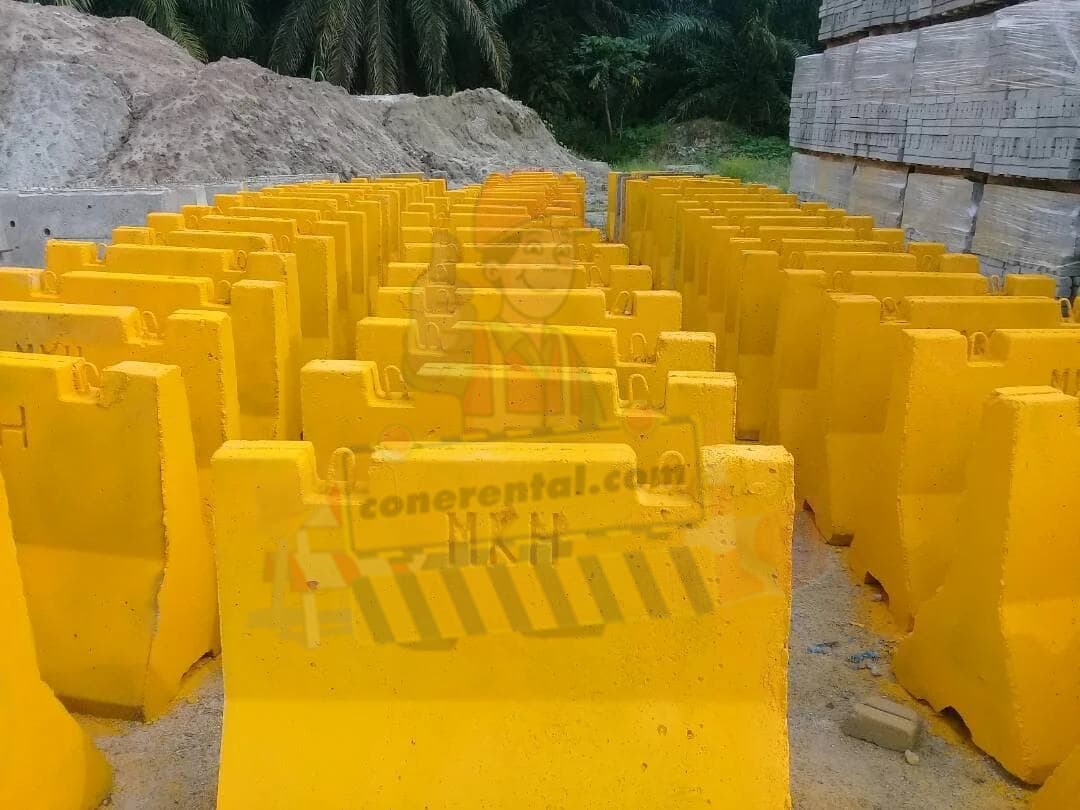
A concrete barrier is the same 800mm high and 1,000mm long, but with a 450mm base and a 50mm lifting hole cast into it. That hole tells you everything: it is not carried, it is lifted. You need machinery to place it and machinery to take it away.
So the first question is not cost. It is whether you have plant on site, and whether the barrier needs to stay put if something hits it.
When the plastic barrier is the right call
- Short duration work where the line moves as the job moves
- Sites with no lifting plant
- Pedestrian separation, footpath diversions and walkway edges
- Anywhere you need to set out, adjust and clear within the same week
- Work where the barrier is delineating rather than restraining
Filled with water it holds its line in wind and against a knock. Left empty it will not, and empty barriers on a live road are one of the more common things we see done wrong.
When you want concrete
- Longer duration works where the layout is fixed
- Higher speed roads where a vehicle could realistically strike the line
- Anywhere the barrier is protecting people working immediately behind it
- Sites that already have an excavator or lorry crane on hand
If the honest answer to "what happens if a car hits this" matters for your site, that is a concrete barrier conversation, not a price conversation.
What each actually costs
| Barrier | Day | Week | Month |
|---|---|---|---|
| 1 Meter Road Barrier (plastic) | RM 15 | RM 20 | RM 25 |
| Concrete Barrier | RM 25 | RM 30 | RM 40 |
Concrete is roughly 50 to 60 percent more per unit, and that is before transport. The bigger cost difference is usually not the rental line at all. Concrete needs heavier transport and plant at both ends, which shows up in the mobilisation charge. Plastic often does not.
A security deposit applies to both, and the amount depends on the equipment and the quantity rather than a fixed published figure. The same goes for how damage and loss are handled. Those are worth a two minute conversation rather than a paragraph, so ask us on WhatsApp and we will explain exactly what applies to your job.
The mistake we see most
Ordering plastic because it is cheaper, then leaving it empty because filling it is a nuisance. An empty 7kg barrier on a road is a marker, not a barrier, and it will not be where you left it in the morning.
If you are going to use plastic, plan how it gets filled and who fills it.
A third option people forget
Road hoarding is a different tool again: a 1,200 x 1,100mm panel at 6.6kg, at the same rate as the plastic barrier. If what you actually need is to screen the works and keep people out rather than hold a traffic line, hoarding does that better than either barrier.
Not sure which?
Tell us the road, the speed, how long the works run and whether you have plant on site. That is usually enough for us to say which one you need, and we will say so even when it is the cheaper one.